
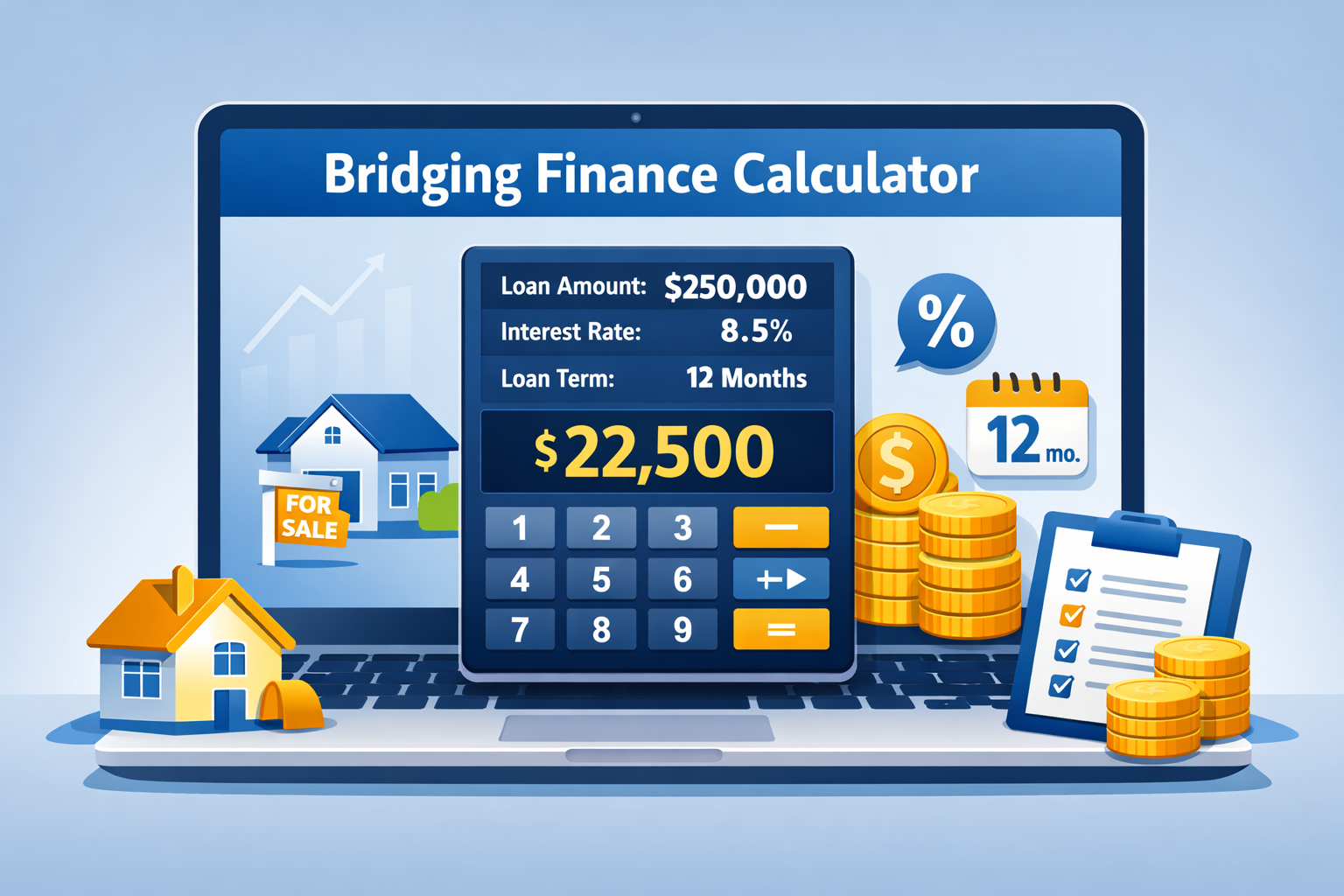
What Is a Bridging Finance Calculator?
A bridging finance calculator is an online tool that estimates the true cost of a bridging loan based on a few key inputs.
It typically calculates:
Monthly or rolled-up interest
Total interest over the loan term
Fees (arrangement, exit, valuation)
Total repayment amount
You may also see it referred to as a:
bridging loan calculator
bridging finance interest calculator
bridging loan cost calculator
short-term property finance calculator
While names vary, the goal is the same: clear cost visibility before borrowing.
 If you‘re also considering budgeting apps, find next step to read our Best Zero Based Budget Apps guide to help you with better money management.
What Is Bridging Finance?
Bridging finance (or a bridging loan) is short-term property finance designed to “bridge” a funding gap. It’s commonly used when:
You need to buy before selling another property
You’re purchasing at auction
There’s a chain break
You’re funding a refurbishment or development
These loans are usually short-term (1–18 months) and come with higher interest rates than standard mortgages due to speed and flexibility.
Because costs add up quickly, using a bridging loan calculator before committing is critical.
How a Bridging Finance Calculator Works
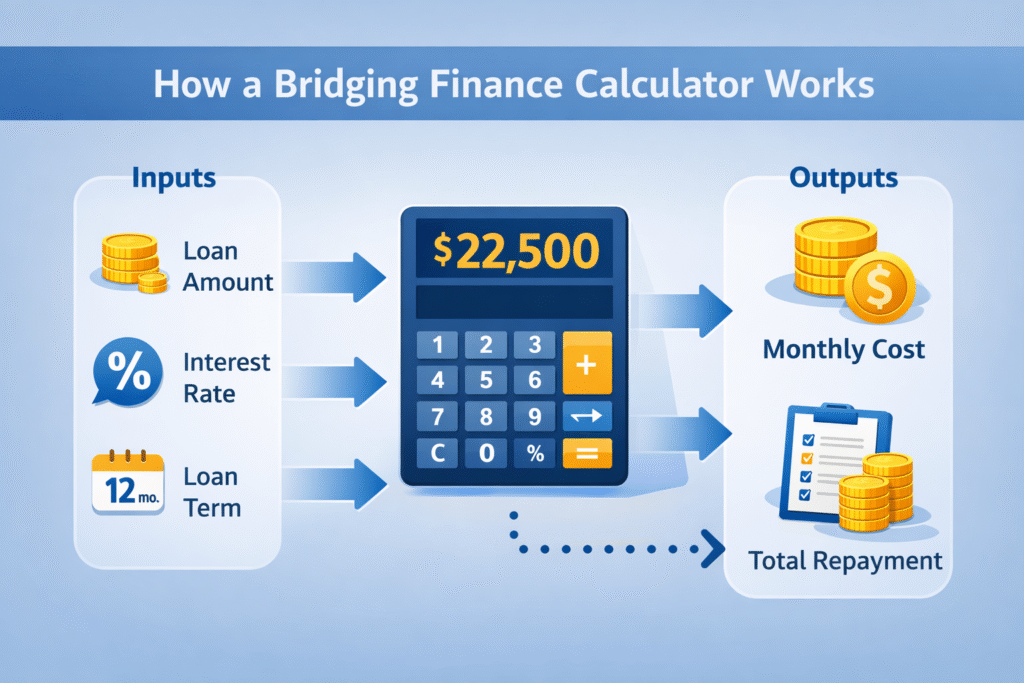
A reliable bridging finance calculator works by combining loan details and lender charges to produce a realistic cost estimate.
Typical Inputs
You’ll usually need to enter:
Loan amount – how much you’re borrowing
Interest rate (monthly %) – e.g., 0.75%–1.25% per month
Loan term – number of months (e.g., 6 or 12)
Arrangement fee – often 1%–2% of the loan
Exit fee (if applicable)
Typical Outputs
The calculator then shows:
Monthly interest cost
Total interest payable
Total fees
Overall repayment amount
This is why a bridging loan cost calculator is far more useful than just looking at interest rates alone.
Bridging Finance Calculator Formula (Simple Explanation)
You don’t need complex maths to understand how to calculate bridging finance.
Here’s the logic in plain English:
Take the loan amount
Multiply it by the monthly interest rate
Multiply that by the number of months
Add fees (arrangement + exit)
Combine everything to get total repayment
Simplified Formula
Total Interest = Loan Amount × Monthly Interest Rate × Loan Term
Total Cost = Total Interest + Fees
Total Repayment = Loan Amount + Total Cost
Example Calculation (Real-World Scenario)
Let’s walk through a realistic example using a bridging finance calculator.
Scenario
Loan amount: £300,000
Interest rate: 0.9% per month
Loan term: 9 months
Arrangement fee: 2%
Exit fee: None
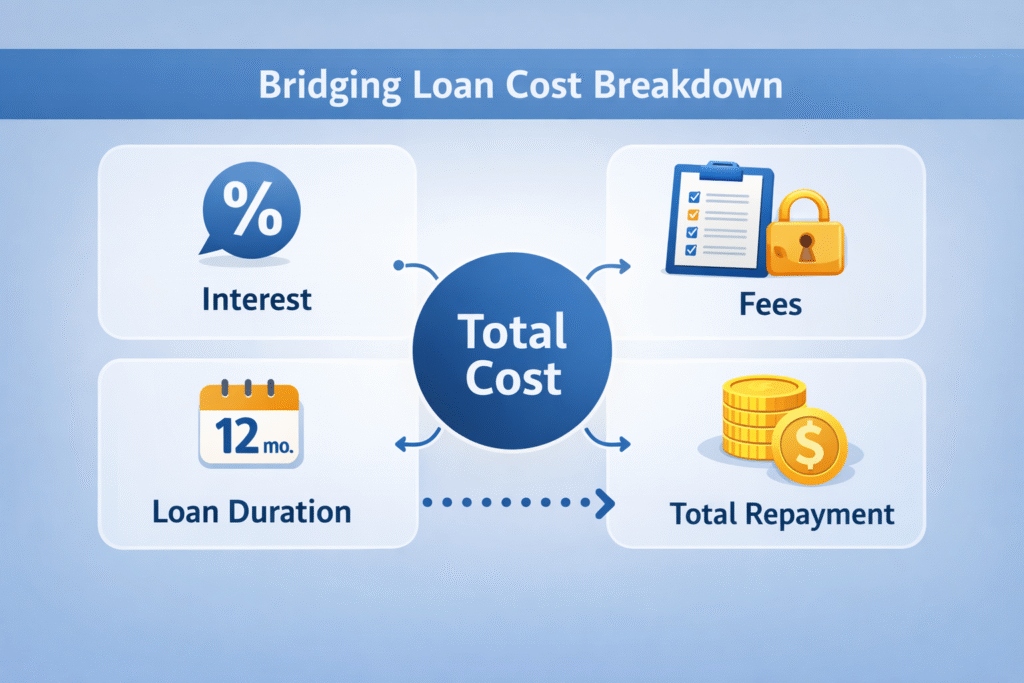
Key Factors That Affect Bridging Finance Costs
Even with a calculator, it’s important to understand what influences the final numbers.
1. Interest Rate
Bridging loans are priced monthly, not annually. Small differences (0.8% vs 1.0%) can mean thousands in extra cost.
2. Loan Duration
The longer the loan runs, the higher the interest. Keeping the term short is one of the best ways to reduce costs.
3. Loan-to-Value (LTV)
Lower LTV loans usually attract better rates. Higher LTV increases lender risk—and cost.
4. Fees & Exit Strategy
Arrangement fees, exit fees, valuation costs, and legal fees all impact the final figure. Some calculators don’t include all of these by default.
This is why using a bridging loan cost calculator with adjustable inputs is essential.
When Should You Use a Bridging Loan Calculator?
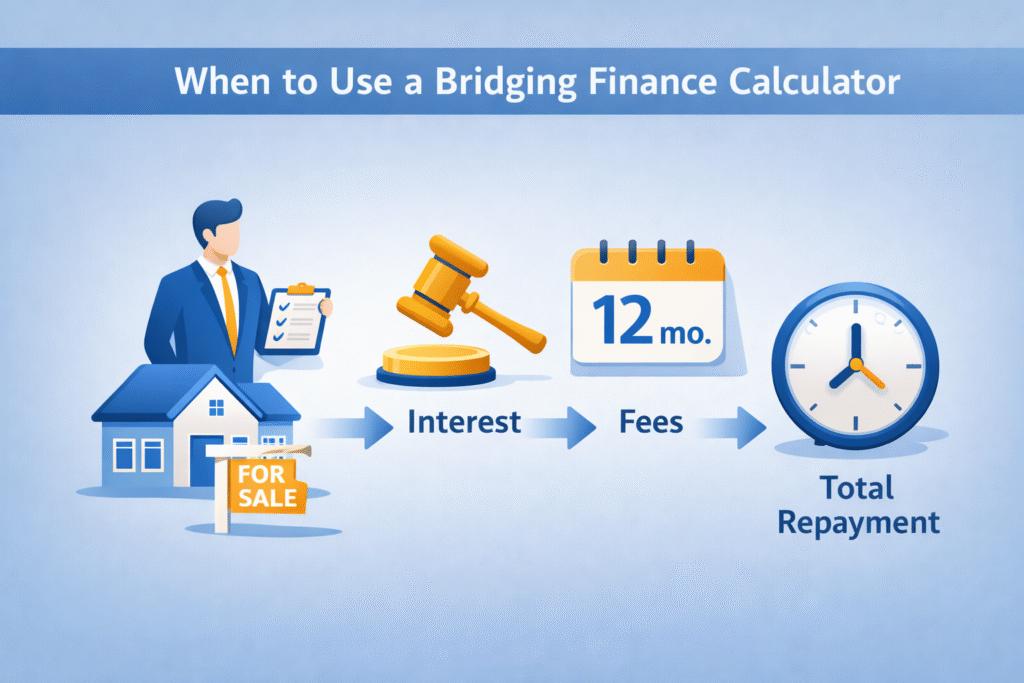
You should always use a bridging finance calculator before applying, especially in these scenarios:
Auction purchases (tight completion deadlines)
Chain breaks in residential transactions
Refurbishment or light development projects
Time-sensitive investment opportunities
Buying before selling an existing property
If speed matters, cost clarity matters even more.
Limitations of a Bridging Finance Calculator
While extremely useful, calculators are still estimates.
What They Can’t Fully Predict
Lender-specific underwriting adjustments
Credit profile impact on rates
Unexpected extension fees
Market or valuation changes
Think of a bridging loan calculator as a planning tool—not a final offer.
Tips to Reduce Bridging Finance Costs
Before applying, use your calculator strategically.
Smart Cost-Saving Tips
Keep the loan term as short as possible
Choose lower LTV where feasible
Avoid unnecessary extensions
Compare multiple lenders
Have a clear, realistic exit strategy
Re-running your numbers in a bridging finance interest calculator after each adjustment can save you thousands.
Conclusion:
A bridging finance calculator is one of the most important tools in short-term property finance.
Key points to remember:
Bridging loans are fast—but expensive if misunderstood
A calculator shows true cost, not just rates
Always factor in fees and loan duration
Compare monthly vs rolled-up interest
Use estimates to negotiate smarter deals
Before you apply for any bridging loan, estimate your costs first. A few minutes with a bridging loan calculator can protect your profit—and your peace of mind.
Frequently Asked Questions (FAQ)
How accurate is a bridging finance calculator?
Most calculators are highly accurate for estimates, but final costs depend on lender terms, valuation, and credit profile.
Does a bridging loan calculator include fees?
Some do, some don’t. Always check if arrangement and exit fees are included or added separately.
Is bridging finance expensive?
Yes, compared to standard mortgages. However, when used short-term with a clear exit, it can be cost-effective for time-sensitive deals.
How long can bridging finance last?
Typically 1 to 18 months, though some lenders offer up to 24 months in special cases.
Leave a Reply