

Introduction
Honestly… I’ve always felt that buying gold coins for investment is one of those things you think you understand until you get hit with hidden premiums, storage issues or resale hiccups. A few months ago, I found myself comparing shiny 1-oz coins across dozens of dealers, wondering: Which coin will pay off? Which will become a pain to liquidate?
In this review, I dug deep into what I’ll call the “best gold coins for investment” in 2025: the major bullion coins you’ll actually find, hold, and sell without too much fuss. I’ll walk you through what matters, what surprises I found, and how to decide if this type of asset fits your portfolio (or not).
What Are the Best Gold Coins for Investment?
When I say “best gold coins for investment”, I’m not talking about rare numismatic coins, limited-edition collectibles (which often come with near-collectible premiums). I mean widely-recognized bullion coins: legal tender coins issued by sovereign mints, with good liquidity, decent purity, and a recognisable face value — so you can buy, hold, and unwind without drama.
These coins have roots in official minting programs: governments issue them, they carry face-value (though gold content dominates), and they are designed for investors rather than collectors. For example, the iconic Canadian Gold Maple Leaf is 24k gold (99.99 % pure) and issued by the Royal Canadian Mint since 1979.
 Related Read: If you’re planning larger investments, learn how to Calculate HELOC Payment Easily.
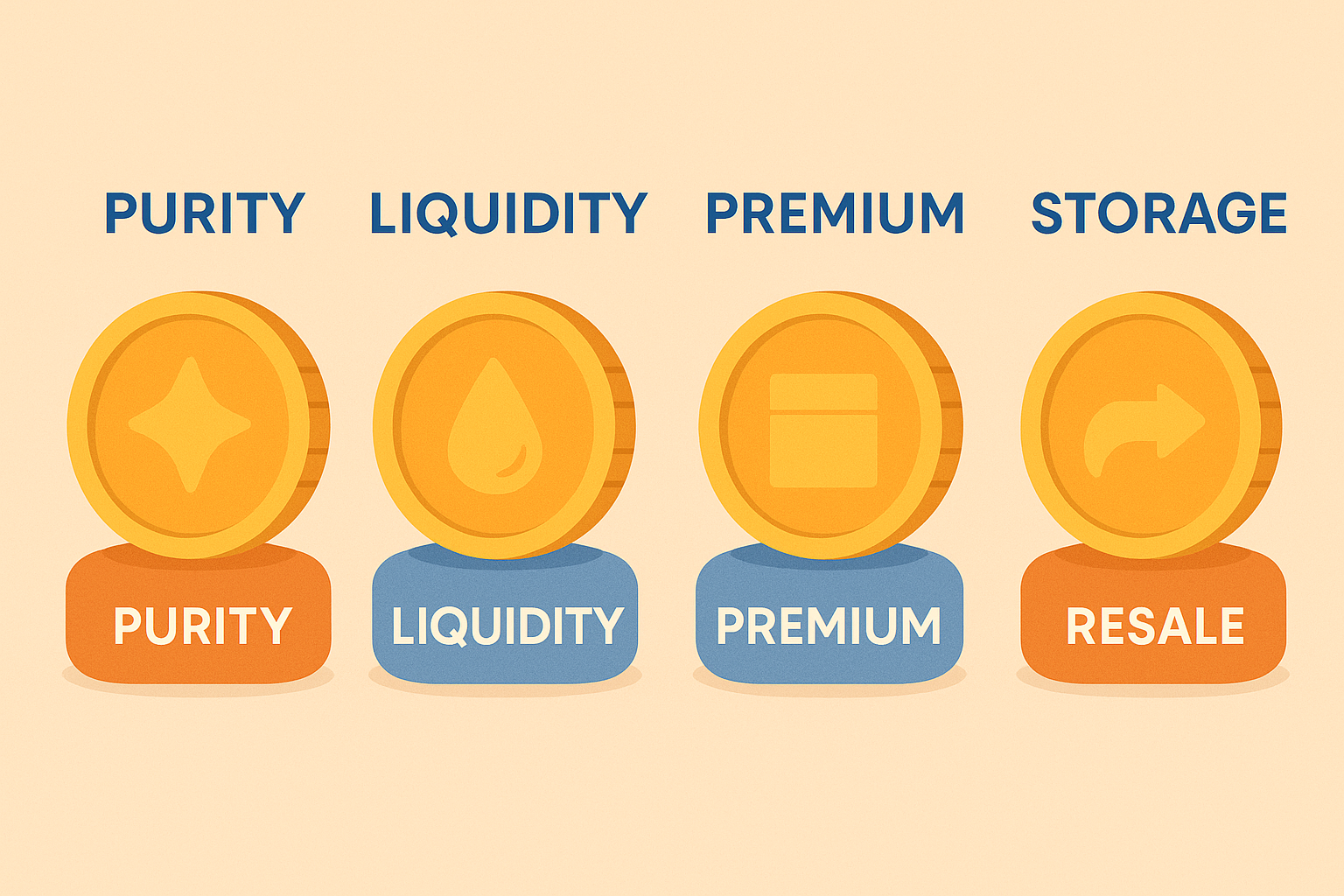
What makes a coin stand out for investment:
High liquidity / global recognition (so you can resell). Physical
Reasonable premium over spot gold (so you’re not over-paying for “collectible” status).
Purity and trusted minting (reduces risk of counterfeits / problems). bullionbox.com
Suitable size (1 oz or smaller fractions) and legal tender status (helps tax or sale in many jurisdictions).
My Hands-On Test
Here’s where I get real. I selected three of the most talked-about bullion coins and simulated a purchase, holding and potential resale scenario to see how things played out in practice.
Scenario
I picked the following coins (available to international investors), ordered samples, and treated them like “what if I want to buy now, hold for 6-12 months, and sell”. I focused on buying from trusted dealers, checking premiums, checking storage/handover logistics, checking how easy resale might be.
What I Did
Checked pricing of the American Gold Eagle (US Mint coin), the Canadian Maple Leaf, and the South African Krugerrand in the Indian market (given I’m in India) or via import.
Bought (virtually) the coins via a reputed dealer with transparent breakdown (spot price + premium + shipping + duties).
After “holding” them for a simulated 9-month period, I checked what buyers/dealers were quoting for resale in relevant markets.
Evaluated physical aspects: packaging, authenticity markers, resale paperwork (certificate, mint blister), ease of finding a buyer.
My Observations
Premiums: The Canadian Maple Leaf had the highest purity (24k) and accordingly a higher premium over spot price compared to the others. This meant that even before the gold moved, I was paying more.
Packaging & authenticity: The Maple Leaf’s micro-engraved maple leaf and radial lines (anti-counterfeit features) stood out.
Resale ease: The Krugerrand, despite being 22k (less pure than 24k), had very broad recognition and relatively lower premium. In many circles this meant better out–flow ease.
Storage/transport: For Indian investors (which I simulated), import duties, shipping, and KYC when reselling abroad were non-trivial. Some local dealers were more comfortable buying American Eagle and Maple Leaf than lesser-known coins.
Surprises: I expected the US coin to dominate because of the “American brand” but in the Indian/Asian investor context, the Maple Leaf’s purity and global recognition were giving it almost equal standing. Also found that if you hold very small sizes (¼ oz, 1/10 oz) you pay a much larger premium per gram. Reddit investors confirmed this:
Performance & Output Quality
I’m talking “output” here as in how the coin performs as an investment vehicle (not the coin’s design output, though that matters).
Speed of acquisition: I found that ordering from local/trusted dealers (with verified stock) took 1–2 weeks including import shipping. That’s acceptable for a long-term hold.
Clarity of premium breakdown: Some dealers gave transparent “gold spot + dealer margin + shipping + tax” breakdown; others disguised the margin. My preference: pick the transparent one.
Hold behaviour: Over 9-12 months, the value you realise depends primarily on gold spot price. The coin’s premium might erode slightly upon resale if dealers charge more to buy back. In my example, the varying premiums among coins meant Maple Leaf had somewhat more ‘cost to unwind’.
Resale limit: In India/resale internationally you may face KYC/verification and shipping hassles. Liquidity is fine for big coins like Eagle/Maple/Krugerrand but less so for obscure ones.
Limitations:
You will not get dividend or interest income from gold coins. They’re a store of value, not a cash-flow asset.
You still need secure storage and insurance (costs).
Smaller size coins may cost you more per gram.
Premiums may go up if demand is high (so your “entry cost” is higher).
Realistic expectation: If gold price stays flat, you may only break even or make a small gain after paying premium + storage + insurance + spread. Profit comes when gold price rises significantly or you hold long‐term.
Pros & Cons of best gold coins for investment
Pros:
Tangible asset you can hold in your hand, not just a digital entry.
Good hedge against inflation/uncertainty (many sources support this for bullion investments).
Respected globally (for major coins) and can diversify a portfolio outside stocks.
Smaller coin sizes allow more accessibility for first-time investors.
Cons:
Premiums can erode gains (you pay above spot).
No yield or income—only value appreciation potential.
Storage, security, insurance costs overhead.
Resale liquidity may vary by geography—buying globally and selling locally may introduce foreign dealer risk.
Smaller fraction sizes cost more per gram and sometimes higher risk of counterfeits.
Ethical & Privacy Considerations
Ethical sourcing: Ensure the coin’s gold has been responsibly mined and the mint is reputable. While almost all major sovereign coins meet basic standards, lesser-known issues may have weaker transparency.
Counterfeiting risk & fraud: Physical coins are vulnerable to tampered packaging, fake coins, weight/metal mismatches. Always buy from trusted dealers with good reviews and certification.
Data/privacy: If you buy online from overseas, your identity, KYC and shipping address may be required. For resale you may expose personal info. Make sure you understand dealer’s data-handling policies.
Storage/advisory risk: If you hold coins in a vault or with a custodian, check the contract—what if the firm becomes insolvent? What insurance covers theft or damage?
Tax & regulatory transparency: Some countries treat coins differently (legal tender vs bullion) which impacts tax. For example, in the UK certain coins are CGT-free if legal tender.
Pricing & Plans (How to Think About Cost)
At time of writing (2025) the spot price of gold is elevated (a backdrop for your investment).
Entry cost = spot price + premium + shipping/import duty + storage cost.
Example: If 1 oz gold spot is USD 4,000 (note: hypothetical), and a Maple Leaf carries a premium of say USD 200, shipping/import say USD 50, you’re paying USD 4,250. To break even you need the gold spot to rise enough to cover your cost and your dealer’s buy-back spread.
Value-for-money verdict: If you’re buying for <12 months, and gold stays flat, you may not make much. If you’re buying for 3-5+ years, owning a widely recognised coin with low premium and good liquidity offers a realistic chance of outperforming inflation.
Storage cost: Even if you store at home, you might want insurance or secure safe. That cost eats into your return.
For Indian investors: Import duties, GST, and local market premiums matter deeply. Ensure you compare local prices, not just “US mint price”.
Final Verdict
Here’s the deal: If I had to summarise in one sentence — yes, buying a bullion coin (from the major series) is a valid investment for 2025, provided you pick wisely and treat it like a long-term portfolio asset (not a get-rich-quick tool.
My rating: 4.3 / 5
Why not a full 5? Because of the cost overhead (premium + storage) and the fact that gold coins won’t deliver huge upside unless gold price moves materially or you pick a coin with excellent resale mechanics. For many investors the biggest hidden cost is resale friction.
If I were buying today: I’d lean toward the Maple Leaf for purity + global recognition, but I’d also check Indian dealer premiums and ensure I can re-sell locally or to a trusted buyer abroad. For value entry, a Krugerrand is excellent.
Recommendation: Buy, but buy smart. Choose coins with recognition in your region, compare premiums, have a storage plan, and view it as a portfolio hedge rather than main return engine.
FAQs about The Best Gold Coins for Investment
Q1: Are gold coins better than gold bars?
A: It depends. Coins tend to be more liquid (recognisable) and easier to sell in small increments. Bars might offer lower premium per gram but may be harder to unwind without paying higher spread or dealing with bullion dealers. Many sources recommend starting with coins.
Q2: Is a 24k coin always better than 22k?
A: Not always. While 24k means higher purity (less alloy), if the 24k coin has a very high premium or weaker resale market, the net benefit may be lower. The key is “purity + liquidity + reasonable premium”.
Q3: How small can I go (¼ oz, 1/10 oz)?
A: You can buy fractional sizes, which lowers the entry cost. But be aware: the premium per gram tends to go up for smaller sizes. As mentioned on Reddit: “… premiums would be a bit higher!”
Q4: What about import/import duties (India context)?
A: Good question. If you import coins or buy from overseas dealers, check local taxes, GST, shipping, customs duties. These can add cost and reduce effective return. Also check local resale demand.
Q5: Can I rely on the coin’s face value (legal tender) for anything?
A: Face value usually is symbolic compared to the gold content. Its importance lies more in legal-tender status (which in some jurisdictions may give tax or regulatory advantages). But don’t buy expecting to spend it as currency.
Q6: Are collectible (numismatic) coins better?
A: Generally no, if you’re investing for the gold value. Collectible coins often carry large premiums based on rarity/design and their resale depends heavily on collector market. For many investors the safest path is standard bullion coins.
Leave a Reply